

Adapting a logo for textiles: the rules to follow
 Florent Dabernat
April 3, 2026
2 min read
Florent Dabernat
April 3, 2026
2 min read
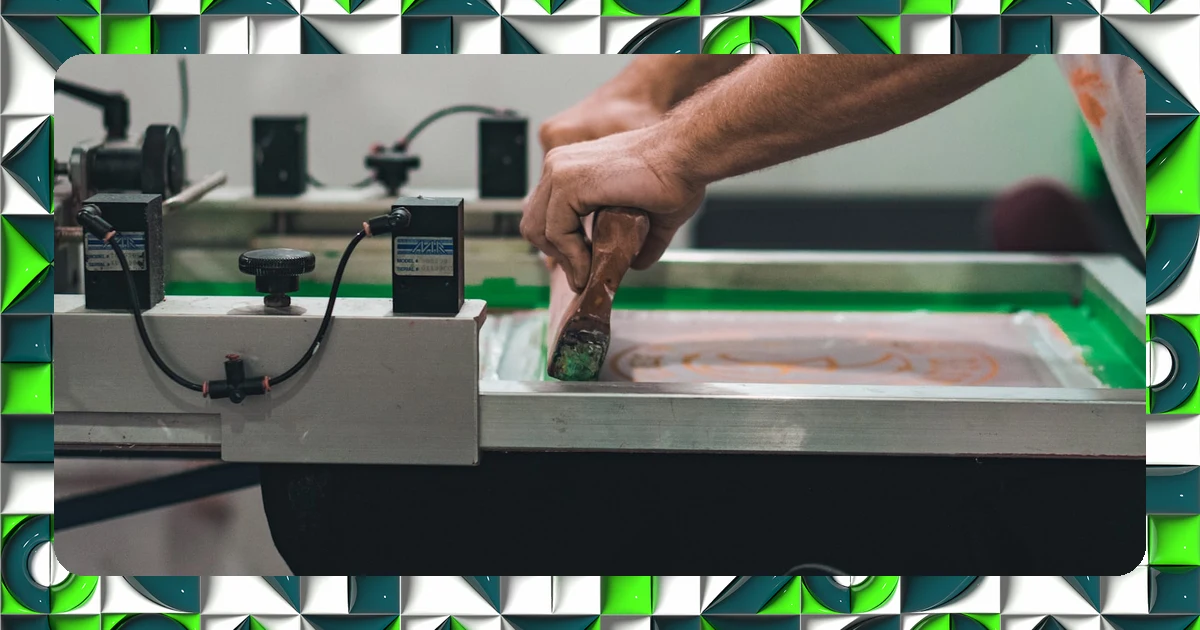
A logo that works perfectly on screen doesn't always survive the move to textile: screen printing, embroidery, heat transfer each impose their own constraints, very different from those of the pixel.
Constraints different from digital
Digital tolerates fine gradients, transparency, pixel-scale detail. Textile forgives none of that: embroidery can't reproduce a gradient, screen printing imposes a limited number of distinct colors, and heat transfer requires shapes simple enough to be cleanly cut.
The rules to follow
Three simple rules help avoid bad surprises. First, limit the number of colors in the logo from the design stage, to stay compatible with the most common textile printing techniques. Second, avoid overly fine details that disappear in embroidery or tear in heat transfer after a few washes. Finally, always test a physical sample before mass production, since the real-world result often differs from the digital simulation.
A logo system designed for multiple formats needs to build in textile constraints from the design stage, not discover them when the first batch of printed clothing arrives.
The Machina Concept case
On Machina Concept, textile design was an integral part of the branding project, alongside the modular logotype and the classic graphic variations. For a fitness brand where sportswear is a strategic visibility channel, this variation wasn't a secondary option: it was part of the brand system from the design stage.
The result: a consistent identity between digital and textile, able to live just as well on a mobile app as on a garment worn at the gym or outdoors.
Frequently asked questions
-
Do you need a specific version of the logo for textiles?
- Often yes, a version simplified in color count and detail, derived from the main logo but adapted to textile production constraints, rather than a simple shrink of the digital version.
-
Which textile printing technique is most faithful to the original logo?
- Screen printing generally offers the best trade-off between color fidelity and cost, while embroidery suits simple logos with few details and holds up well over time.
-
What's the maximum number of colors for a logo destined for textile?
- There's no absolute rule, but limiting it to two or three distinct colors considerably simplifies production, reduces cost and widens the range of available printing techniques.