

Wireframes: choosing the right level of fidelity
 Florent Dabernat
April 24, 2026
2 min read
Florent Dabernat
April 24, 2026
2 min read
In this article
A startup wanting to quickly prototype a customer dashboard, before investing in visual design, first needs to pick the right fidelity level for its wireframes. It's a strategic choice, not just a matter of aesthetics.
Low-fi, mid-fi, hi-fi
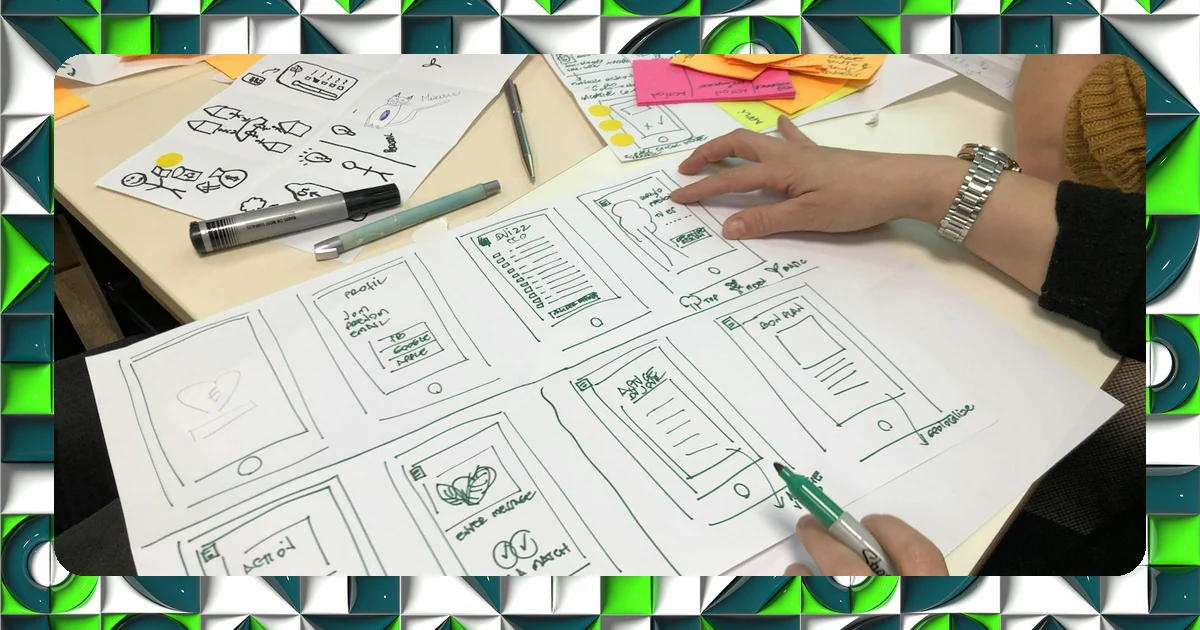
Low-fi wireframes, often done on paper, are used to quickly explore directions without getting attached to premature detail. Mid-fi ones, in grayscale, let you test flows and navigation logic. Hi-fi ones finalize the structure before development, with a level of detail close to the final interface.
The classic mistake is jumping straight to hi-fi to "save time": it locks in structural decisions before they've been tested, which usually costs more in late-stage iterations.
Z-layout, F-pattern and modular grids
The Z-layout suits marketing pages well, where the eye naturally follows a zigzag path between key zones. The F-pattern fits dense text content better, where reading concentrates on the first lines then scans vertically. Modular grids, for their part, make responsive design easier, offering a structure that adapts cleanly to different screen sizes.
On a lead magnet, repositioning social proof above the fold, a simple wireframe adjustment, grew sign-ups by 22% in an A/B test run over two weeks.
The wireflow: don't forget edge cases
A wireflow chains several screens and their interactions together, following journey logic rather than isolated screens. It must absolutely cover error cases, edge cases and empty states, the most common blind spots in wireframes produced too quickly.
Typical example: a newsletter wireflow, Home → Form → Double opt-in → Confirmation, with empty and error states planned right from the wireframe phase, rather than bolted on in a rush during development.
Frequently asked questions
-
Can you go straight from low-fi to hi-fi without mid-fi?
- Yes on small, simple projects, but on complex flows, mid-fi lets you validate navigation logic before investing time in hi-fi's visual detail.
-
How many screens should a wireflow cover?
- As many as needed to cover the full journey, including error cases and empty states. An incomplete wireflow leaves blind spots that often surface late, during development.
-
Do modular grids slow down initial design?
- A bit at first, while defining the system, but they considerably speed up subsequent iterations and guarantee a responsive consistency that's hard to achieve without a defined grid.