

Why I build almost all my sites on WordPress, mobile first
 Florent Dabernat
May 27, 2026
2 min read
Florent Dabernat
May 27, 2026
2 min read
In this article
Looking at my recent projects, one technical pattern shows up almost every time: WordPress, mobile first, SEO. It's not a lack of technical ambition, it's a pragmatic choice made consciously, over and over.
A pattern that recurs across almost every project
Bernigaud Traiteur, Le Petit Chamarel, SNR, Sémaphore Médias, Pivot Groupe: all these projects share the same technical base. On a portfolio built around SMEs and independent businesses, this choice isn't chance, it's a coherent response to a recurring client profile.
Why this choice, concretely
WordPress offers a level of management autonomy few solutions match at the same cost: the client can edit their text, add a news item, manage their catalog, without systematically depending on a developer. That's decisive for businesses with no in-house technical team.
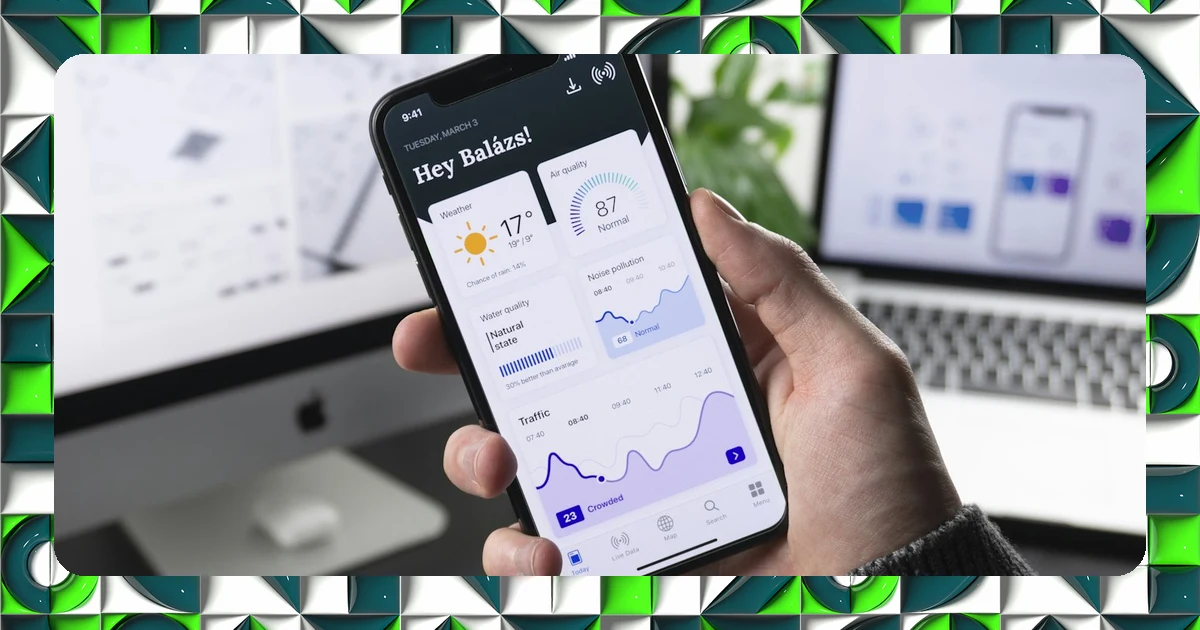
Mobile first has long stopped being optional: the majority of traffic for most of my clients (food service, local retail, media) now arrives from mobile, often on the go, with very little tolerance for slowness.
SEO built in from the start, rather than bolted on afterward, avoids the classic scenario where a beautiful site stays invisible for not having its structure designed for search engines from day one.
This WordPress + mobile first + SEO triptych isn't a default choice, it's the most robust answer I've found for clients who need autonomy, local visibility, and a site that doesn't lock them in technically.
When this choice doesn't apply
On a project like Machina Concept, which includes its own mobile app, this base isn't enough anymore: it requires technologies dedicated to app development. Similarly, a project with very specific scalability needs or an almost nonexistent maintenance budget may point toward Webflow, Framer or a more closed but faster-to-launch no-code solution.
The technical choice always has to answer a real need, not a personal preference repeated out of habit. It's that systematic check, more than the technology itself, that makes the difference over time.
To see where your own site stands on these criteria, IDSEED's free SEO/GEO audit reviews the essential points.
Frequently asked questions
-
Isn't WordPress outdated compared to modern no-code solutions?
- No, it remains one of the most flexible, best-documented CMSs, with a considerable plugin ecosystem. No-code solutions win on speed but often offer less real long-term autonomy.
-
Does mobile first slow down desktop development?
- No, in practice it's the opposite: starting from mobile forces you to prioritize the essentials, which then simplifies extending to wider screens rather than the reverse, where you often have to strip out superfluous elements.
-
Should SEO always be built in from the start of the site?
- Strongly recommended: adding SEO after the fact often requires revisiting the site's very structure (headings, sitemap, content), work far costlier than building it in from the initial design.