

The Double Diamond: structuring a UX project end to end
 Florent Dabernat
April 15, 2026
2 min read
Florent Dabernat
April 15, 2026
2 min read
In this article
An e-commerce site suffering from a high checkout drop-off rate needs a structured framework to identify the real cause, prototype an improvement and verify that it works. The Double Diamond remains the most reliable model for that.
The four phases of the Double Diamond
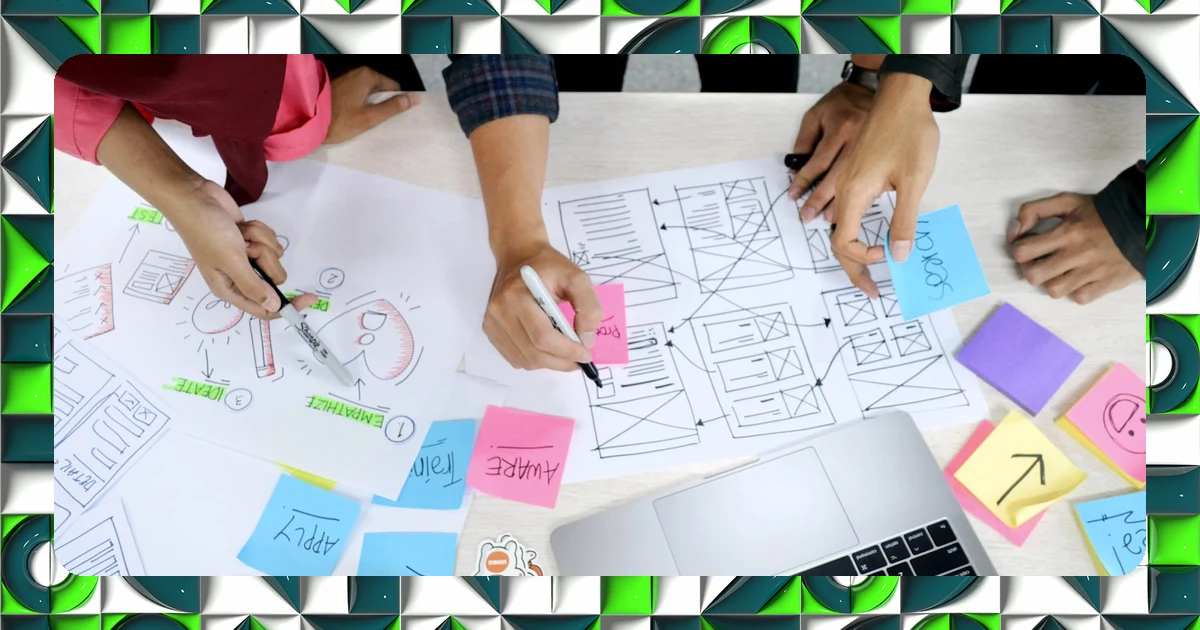
Discover relies on field observation, interviews and benchmarking. Define synthesizes the insights gathered and reframes the problem in an actionable form. Develop opens the ideation phase, produces mockups and runs quick tests. Deliver prepares the final design, user testing and a measured launch.
The name comes from the shape of the process: two diamonds side by side, each alternating a widening phase (divergence) and a narrowing phase (convergence).
Research, prototyping and testing
Research methods used include interviews, card sorting, shadowing and heat-map analysis. Tools like Maze, Hotjar or Google Analytics help triangulate these different data sources rather than relying on a single one.
Prototype fidelity varies with the project phase: testing early and often, even with rough prototypes, limits the UX debt that accumulates when you wait too long to confront an idea with reality.
On a real e-commerce delivery case, a lack of clarity around price and lead time was identified as the main cause of drop-off. The fix, a summary shown right in the cart and a visible fee estimate, grew mobile conversion by 12%.
Integrating the Double Diamond into an agile cycle
A UX Sprint run ahead of the development sprint helps align user stories, acceptance criteria and the UX Definition of Done with the rest of the product team. That's what avoids the classic scenario where UX arrives too late, once the technical choices are already locked in.
In practice, a five-day UX Sprint schedule can cover: quick discovery, synthesis and problem reframing, ideation and prototyping, testing with a few users, then a readout to the team.
Frequently asked questions
-
Is the Double Diamond compatible with short development cycles?
- Yes, as long as you compress it into a UX Sprint spanning a few days rather than several weeks. The key is keeping all four phases, even accelerated, rather than skipping some.
-
How many user interviews does the Discover phase need?
- Five to six interviews are generally enough to identify the main recurring problems; beyond that, new insights become marginal relative to the extra time invested.
-
Can you skip the Define phase if the problem seems obvious?
- That's risky: what seems obvious internally often hides the real cause as perceived by the user. Formal synthesis avoids solving the wrong problem with good solutions.